Keeping Children Safe Online

Practical online safety advice for parents and schools, from the people who teach it to children every week.
Adult man smiling and helping young boy using a computer with a nature-themed game on the screen in a classroom.

What We Tell Parents Most Often

Children are online earlier, for longer and in more places than most of us were prepared for. Games, group chats, video feeds, homework, all of it in the same device.
We teach children how to use technology well, which means we spend a lot of time on how to use it safely. This page gathers what we tell parents and schools most often: what to look out for, what to set up, and what to do when something goes wrong.
None of it requires you to be technical. Most of it comes down to knowing what is out there and keeping the conversation open.
Inappropriate and Explicit Content
As soon as children start exploring online, they will eventually see something that is not meant for them. It might be explicit, frightening, cruel or simply confusing. Preparing for that is more useful than hoping it will not happen.
Cyberbullying
Distressing, hateful and extremist content
Scams and online challenges
Fake news, hoaxes and misinformation
Edited and filtered images
ONLINE GAMES
Gaming is social, creative and, for a lot of children, the main way they spend time with friends. It is also where several of the bigger online risks live at once.
Practical steps for safer gaming
Deciding whether a game is suitable
The main risks
Why children play

Chat Apps and Messaging

Messaging apps are where a lot of children’s social lives happen, often in group chats that adults never see.
Each app handles privacy, disappearing messages and contact from strangers differently, so it is worth checking the settings on whichever ones your child uses. The recurring risks are much the same as elsewhere: contact from people they do not know, content shared faster than anyone can think about it, exclusion used as a weapon, and pressure to respond immediately at any hour. Agreeing where the phone lives overnight solves more problems than most software.
The limits of parental controls
Search engines
Apps and streaming services
Games consoles
Phones, tablets and computers
Home broadband and WiFi
Digital Footprints, Social Media and Online Predators
Recognising grooming and online predators
Safer social media
Digital footprints

Where to Get Help and Report a Concern

If you are worried about a child, you do not have to work out the right answer alone.
If you are concerned about online sexual abuse or the way someone has been communicating with a child online, report it to CEOP, part of the National Crime Agency, whose Child Protection Advisors handle exactly this. The NSPCC Helpline is available on 0808 800 5000 for advice about any concern, and Childline is there for children themselves on 0800 1111, with online chat and a large library of advice written for young people rather than adults. If a child is in immediate danger, call 999.
For content you have seen on a specific platform, report it in the app first. That is usually the fastest route to getting it removed.

How We Teach Online Safety

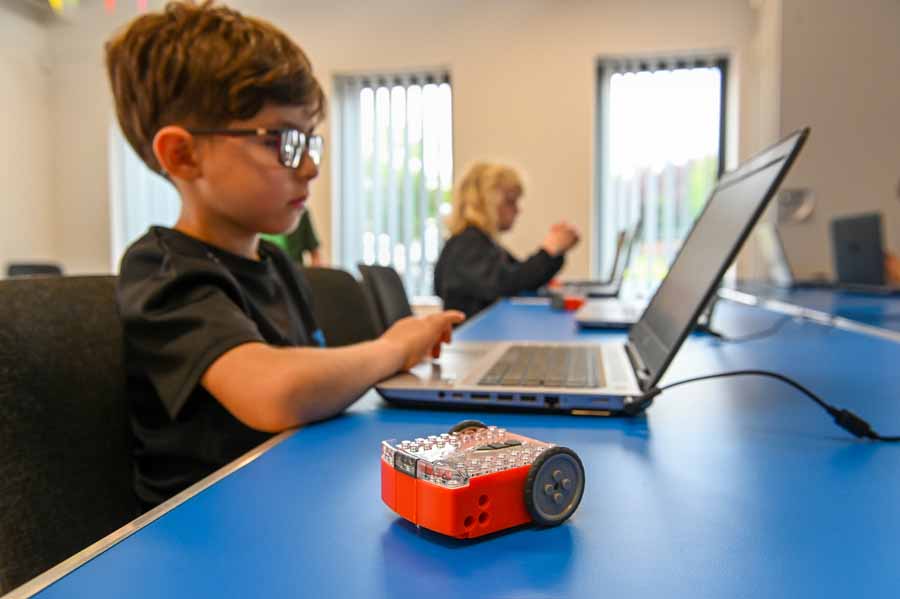
Online safety is not a bolt-on for us. It runs through what we teach, because children who understand how technology works are better placed to spot when something is off. Internet safety features from our youngest early years sessions onwards, and responsible technology use is built into the weekly ComputerXplorers Academy programme alongside coding, robotics and digital creativity.
If your school or community group would like a session on online safety, your local ComputerXplorers team can put one together.

Frequently Asked Questions

Do you run online safety sessions for schools?
Where do I report something serious?
What is grooming and how would I spot it?
My child wants to talk to friends while gaming. Is that safe?
How do I know if a game is suitable for my child?
What should I do if my child has seen something upsetting?
Are parental controls enough on their own?
At what age should I start talking to my child about online safety?