Unlocking Potential:
As a parent, there’s no escaping the importance of tech skills for children. Your child may have their sights set on a STEM-based career. Or, you might simply want to give them the tools they’ll need to curiously and safely navigate a world where tech is an everyday part of our lives. Preparing children for a technology-driven future means unlocking potential at a young age.
What are the benefits for my child of using technology?
Thanks to technology, our young people can access vast amounts of educational information. Today’s kids are part of a digital native generation where tech fluency is built early. Children use tech to access learning and information for school, such as educational apps for classes and homework. Tech is used for research and information seeking, word processing and data processing.
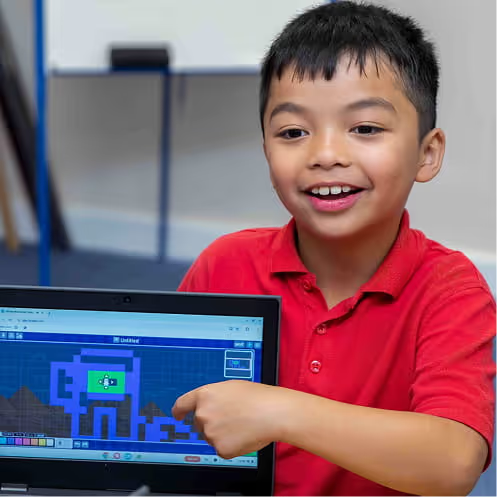
Using technology has become a foundational skill. Confidence in IT in particular supports children’s learning across the curriculum. But it’s not all about consuming technology. At ComputerXplorers, we focus on problem-solving and creativity using technology.
What is an example of a technology skill?
Some examples of really important basic technology skills children need to learn are:
- turning computers and devices on and off safely
- using a mouse and keyboard
- navigating apps on tablets
- browsing the internet safely
With the basics in place, children can move on to develop their wider computer literacy and tech skills.
Computer and tech literacy for kids
Computer and tech literacy prepares kids for aspects of everyday life and can plant seeds for careers and problem-solving innovations.
Some examples of tech skills our young people need to learn are:
Word processing
Creating, formatting, editing, saving and printing documents is where many children start their computer literacy learning.
Data analysis
Data analysis is an in-demand skill involving organising, analysing, plus presenting data, and noticing patterns. For example, using spreadsheets to record experiment data and turning it into graphs.
Internet of Things and devices
Children can learn and understand how devices and machines both in and outside the home connect through networking to the Internet of Things.
E-safety, cybersecurity and digital citizenship
E-safety or how to stay safe online is a fundamental skill all children need to learn, including how and when to recognise and report dangers. Awareness cybersecurity will help them to protect their personal privacy and information. Young people must also learn what it means to be a digital citizen and how to use technology responsibly and respectfully. This means practically navigating issues such as intellectual property and cyberbullying.
Media literacy
The internet is a fantastic resource for research but questioning and assessing the accuracy of sources is a skill that needs to be learned. A 2023 Australian media literacy study found that just 41% of children aged between eight and 16 were confident they could spot a fake news story. We all need to know how to assess information published in media outlets, websites or social media. We also need to understand the impact of agendas, biases and echo chambers.
Communication best practices
As adults, we take a lot of online communication best practices for granted. Children need to learn to craft and send emails. They must also understand how social media platforms create a digital footprint of our online communications.
Find Your Local Centre
Tech skills for creativity and Innovation
Teaching creative technology skills means children are more likely to engage with topics. It also helps children to develop problem-solving skills and learn to do things differently or innovate with digital tools.
Coding and apps
You might associate coding with science and maths, and rightly so, but it’s a creative process. Learning coding languages and how to use code to create things like apps or websites is a handy creative skill.
Programming
Programming is where kids use coding to make things happen—for example, programming a robot to move from A to B.
Robotics and automation
Designing, making and programming robots is pretty exciting at any age, but it’s also a fantastic way to develop children’s interest in STEM. Students can also explore the role of robotics in the digital transformation of industries such as manufacturing and logistics.
Animation and digital art
Children can create digital art to explore themes and feelings and design products. With the right technical skills children can tell stories using tools for the whole creative process, including:
Virtual Reality and Augmented Reality
It’s not just games that use augmented reality or VR headsets. Educational apps can invite children into different worlds to experience other cultures and history closeup. The technology is also increasingly used in the manufacturing, healthcare and automotive sectors.
Artificial Intelligence and machine learning
The UK government recently announced that schools will focus on making efficiencies using AI. However, your child has most likely come into contact with artificial intelligence before going to school.
Toys, virtual assistants like Alexa, plus machine learning and data science assistant ChatGPT all use artificial intelligence. AI is a reality now, but children can also explore how it might be used in the future and the ethics involved. A Forbes survey found that 96% of employers believe AI will shape the future jobs market.
Tech education for our children’s future careers
The World Economic Forum’s Future of Jobs report predicts that 65% of children entering primary school today will work in jobs that don’t yet exist. BBC research predicts our children might have jobs with titles such as:
- renewable energy scientist
- virtual reality developer
Right now, government funding is supporting the existing workforce with training to fill skills gaps and enter tech careers. But the next generation of employers and employees will need good tech and digital skills to access careers that aren’t outwardly ‘techy’. From retail to medicine and yoga to banking.
A few words from our CEO:
Stuart Harley, CEO of ComputerXplorers comments, “In a world driven by technology, early exposure to tech education empowers young minds to become creators, problem solvers, and innovators. By nurturing digital skills from an early age, we unlock children’s potential, preparing them not just for future careers but for a lifetime of confident, creative learning and exploration.”